Most people who search for information about stroke recovery at home are not the person who had the stroke. They’re the daughter who just got off the phone with the hospital. The son who lives in another borough and is trying to figure out whether his father can actually be alone. The spouse who has never thought about any of this before and is now thinking about nothing else. If that’s you, this is written for you.
A stroke is not like a surgery with a predictable recovery arc. Every stroke is different. The brain region affected, the severity, how quickly treatment started: all of it shapes what a person can and can’t do afterward. What’s consistent is that discharge from the hospital or rehab facility happens faster than most families expect, and that coming home is when the real work begins. Stroke recovery at home can go well, but it depends on having the right support in place and knowing what to expect before the first difficult day arrives.
New York families also face a few extra challenges, from walk-up apartments and unreliable elevators to a healthcare system that can be hard to navigate. This guide walks you through what to expect and where to find support.
A note before we get started: This article is for general information and isn’t a substitute for medical advice. Always talk with your family member’s doctor about their specific care needs.
What the First Weeks of Stroke Recovery at Home Look Like
Most stroke survivors who come home from the hospital or a rehabilitation center are not fully recovered. They’re stable enough to leave, which is different. Depending on the stroke, a person coming home might have weakness on one side of the body, trouble speaking or understanding speech, difficulty swallowing, problems with memory or attention, fatigue that’s more severe than anything they’ve experienced before, or some combination of all of these.
The fatigue alone surprises most families. The brain is doing intensive repair work, and it uses an enormous amount of energy. Someone who was sharp and active before a stroke may sleep much of the day in the early weeks, and on its own, that’s usually not a bad sign. It’s the brain doing what it needs to do. But a sudden change, like becoming much harder to wake or newly confused, is a reason to call the doctor or 911 right away.
Daily life becomes much harder. Getting dressed. Showering. Getting to the bathroom safely. Making a meal. Navigating a New York apartment when your balance is off or one arm isn’t working the way it should. These aren’t small problems. They’re the whole day.
This is why stroke recovery care at home usually involves more than one kind of help. Some of it is clinical, and some of it is simply about getting through each day safely.
What a Rehabilitation Program Includes for Stroke Recovery Care at Home
Stroke recovery typically involves several types of therapists, each with a specific focus, and together they make up the person’s rehabilitation program. Understanding who does what matters, because it’s easy to assume one person covers everything, and they don’t.
- Physical therapy focuses on mobility, balance, strength, and gait. A physical therapist (PT) works on helping someone walk safely again, transfer in and out of chairs, and move through space without falling. In the early weeks after a stroke, this is foundational.
- Occupational therapy focuses on the activities of daily life: dressing, bathing, eating, using the kitchen. An occupational therapist (OT) assesses what someone can do independently and works on restoring those functions, often with adaptive equipment and modified techniques.
- Speech-language therapy addresses communication, language processing, and swallowing. Stroke survivors who have trouble speaking, finding words, understanding others, or swallowing safely need a speech-language pathologist (SLP). This is more common than people realize. Swallowing problems in particular are present in a significant share of stroke survivors and can be medically serious.
The rehabilitation program often starts at home, with therapists visiting based on what the person needs. Once the person is no longer homebound and can get out more easily, therapy usually moves to outpatient visits. However, none of these therapists are there at 7 in the morning when someone needs to get out of bed. That’s a different need, and it’s where a home health aide can fill in.
How to Care for a Stroke Patient at Home: What a Home Health Aide Does
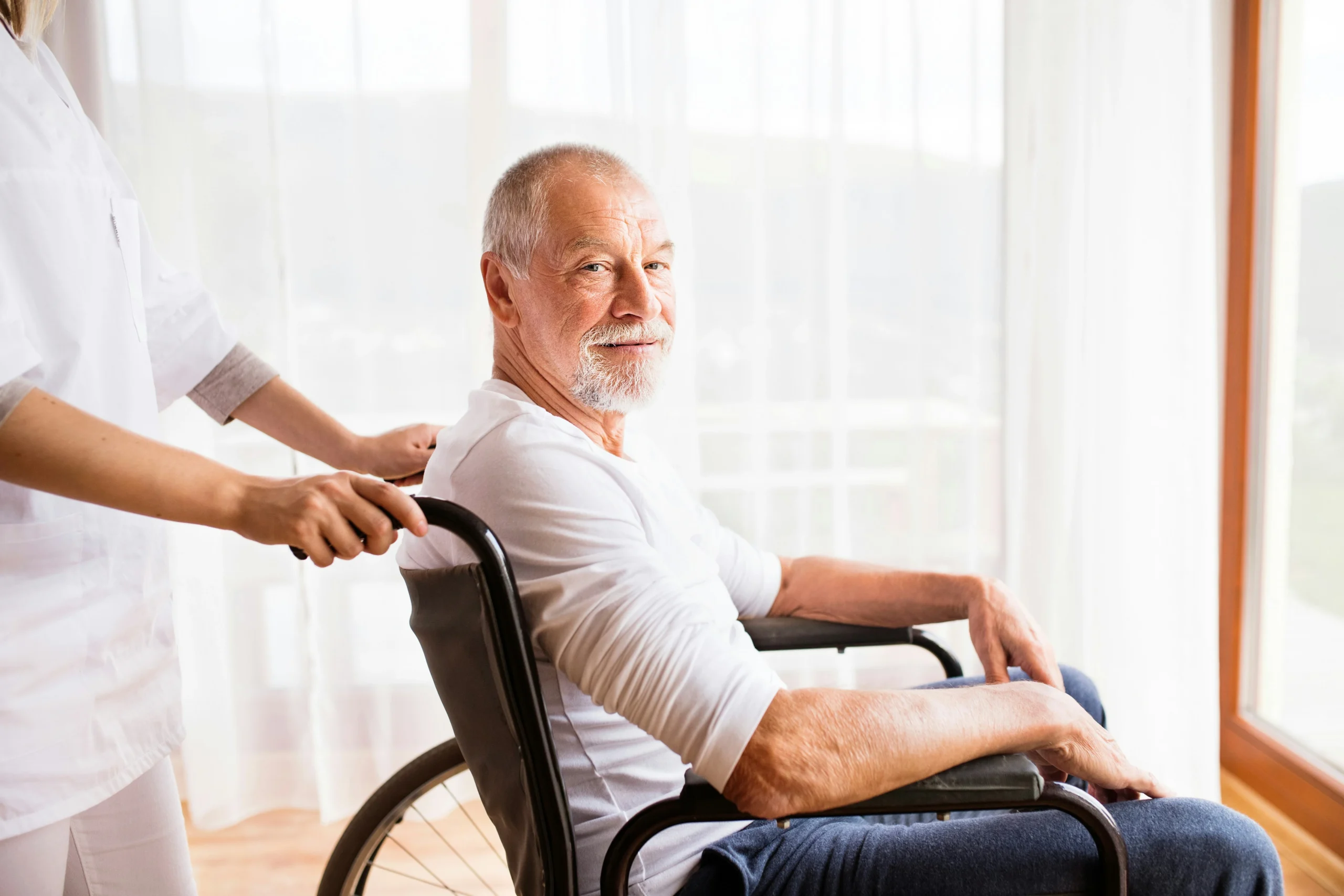
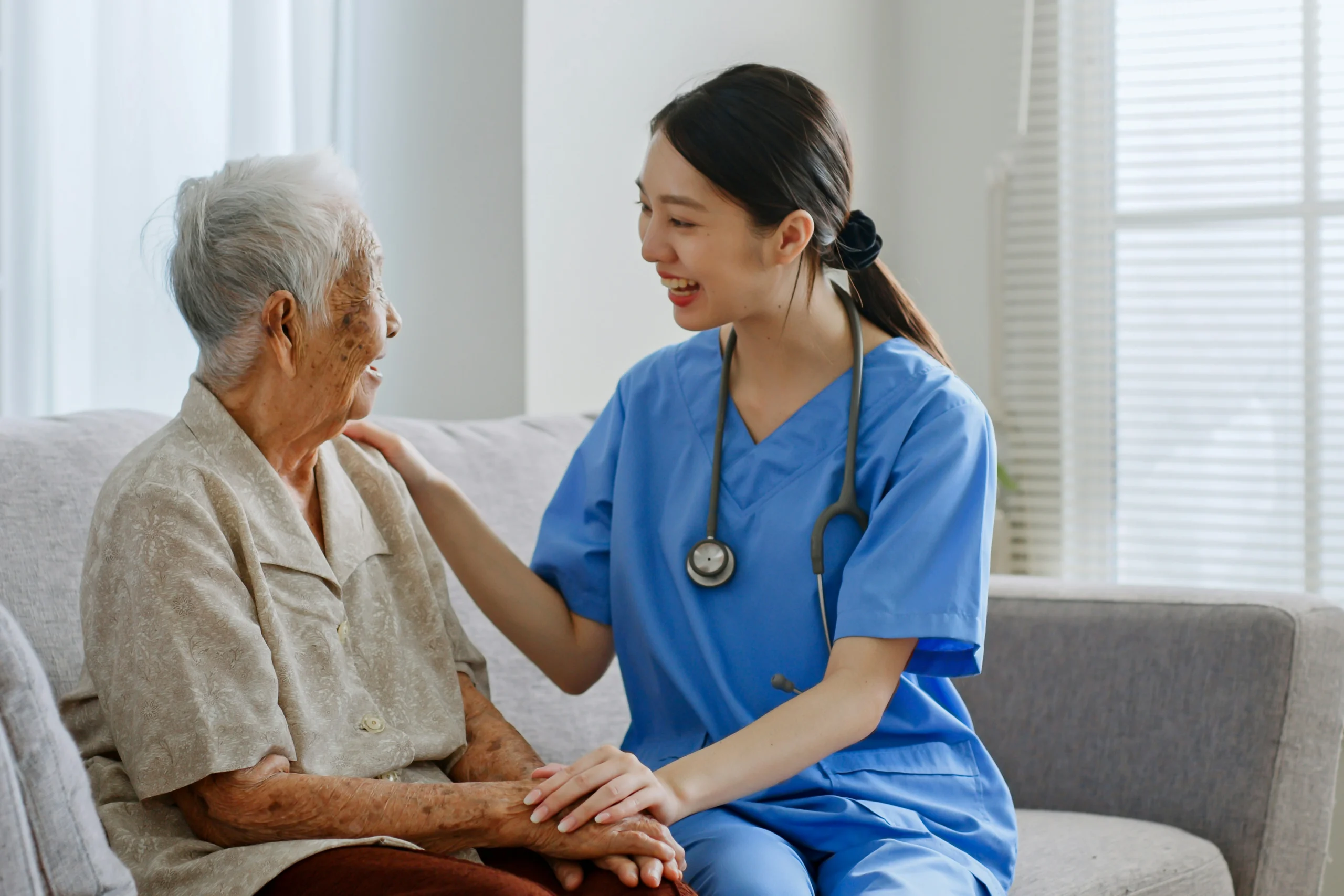
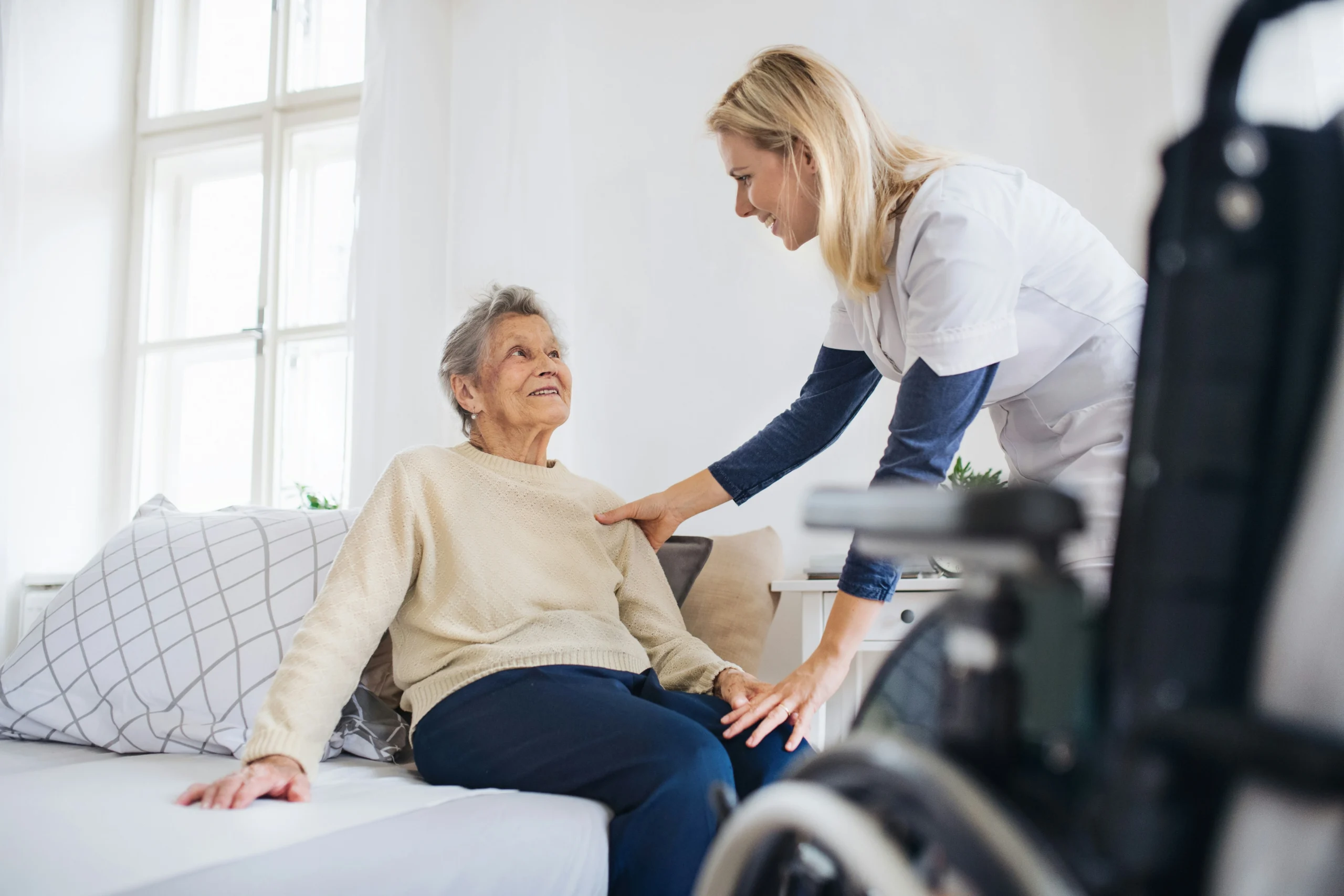
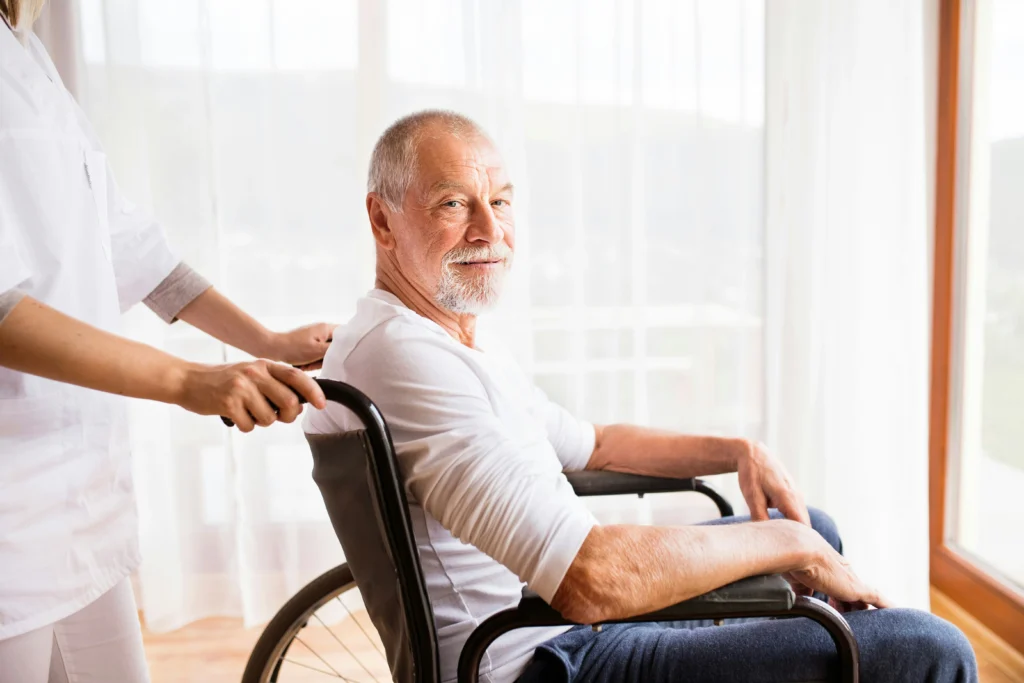
Many families wonder how to care for a stroke patient at home when they can’t be there around the clock. A home health aide is often the answer. The aide is the person there for the daily reality of recovery. Not the clinical interventions, but the living.
After a stroke, a long list of ordinary tasks becomes genuinely unsafe or impossible to do alone, at least in the early weeks. An aide helps with:
- Morning and evening routines: getting up, washing, dressing, getting to bed safely
- Bathing, with attention to the fall risk that every stroke survivor faces in a wet bathroom
- Meal preparation, following any swallowing or diet instructions from the care team
- Medication reminders
- Mobility support inside the home: getting to the bathroom, moving between rooms, managing stairs if they exist
- Accompaniment to therapy appointments and medical follow-ups
- Companionship and supervision, being a presence when no family member can be there
- Watching for warning signs that something has changed and needs attention
That last one is more important than it sounds. Stroke survivors face a meaningfully elevated risk of a second stroke in the weeks and months after the first. The signs of a second stroke can be subtle, and having someone present who knows to call 911 immediately can change the outcome.
It’s worth knowing that an aide is not a nurse and not a therapist. They won’t manage wound care or adjust a rehabilitation program. But for the gap between clinical appointments and daily life, which is most of the day, they’re the person who makes staying home possible. For many families, this kind of home health care after stroke is what turns a risky discharge into a workable plan.
The Emotional Side of Home Care After a Stroke for Survivors and Families
Stroke recovery is not linear. There are good days and hard days, and the hard days can come without warning. A person who managed independently on Tuesday may need more help on Wednesday because they slept poorly, because the fatigue is heavier, because something in their mood has shifted.
The emotional dimension of stroke is real and it’s often underestimated. Depression affects a large share of stroke survivors, and it can look like withdrawal, irritability, or simply a loss of motivation to do the therapy that’s supposed to help them recover. This is not a character issue. It’s a neurological one. It’s worth raising with the medical team if you’re seeing it. And if your family member ever talks about not wanting to live or harming themselves, contact their doctor right away or call or text 988, the Suicide & Crisis Lifeline.
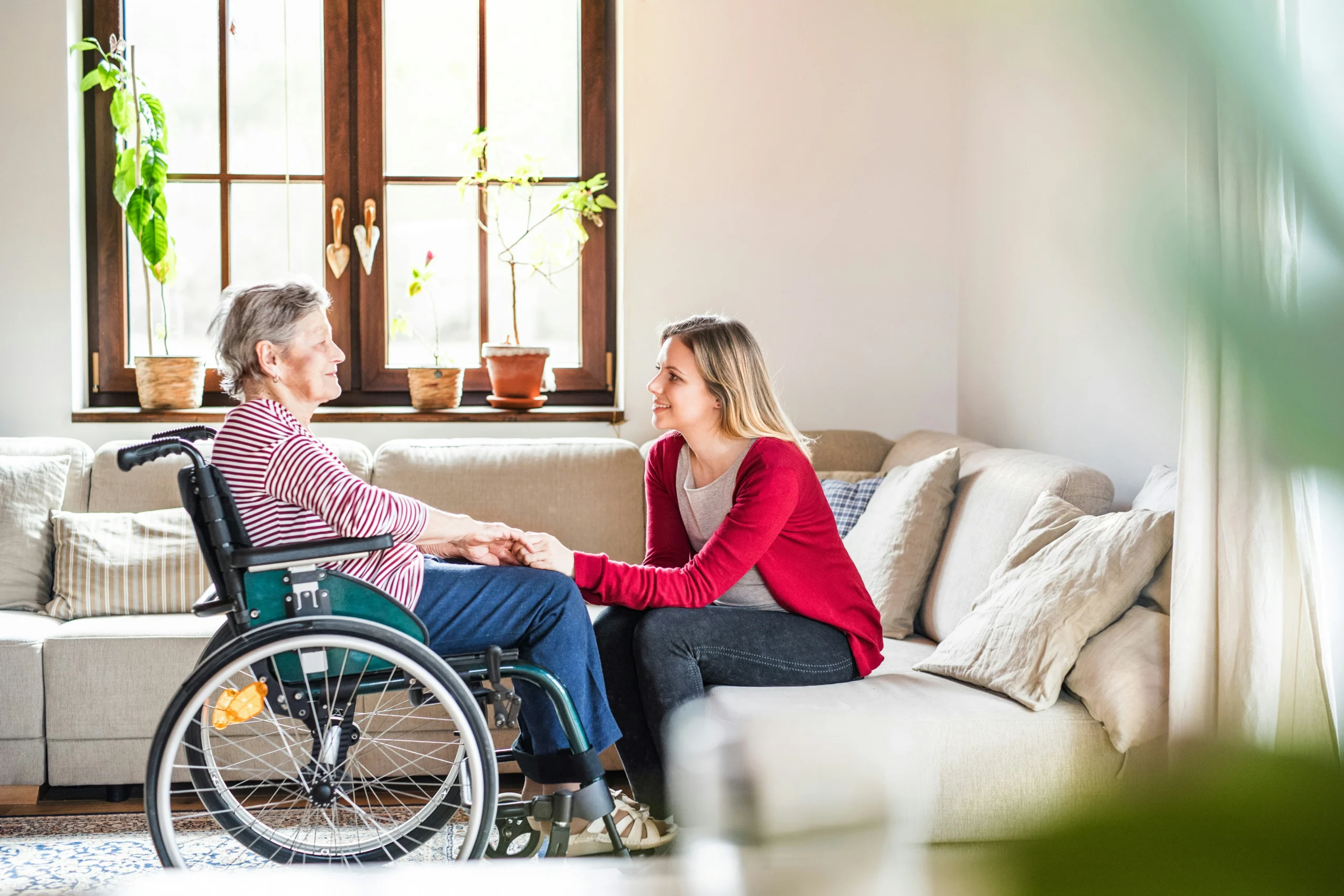
Families also carry more than they expected. If you’re the primary person managing a parent or spouse after a stroke, you’re doing something genuinely demanding, and it doesn’t always get acknowledged. An aide doesn’t just help the stroke survivor. It also gives family caregivers some actual rest and space.
Preparing for Stroke Recovery in New York: Apartments, Walk-Ups, and Transportation
Apartment layout matters. A stroke survivor coming home to a small New York apartment may be fine, or may face a bathroom that’s too narrow for a wheelchair, a bedroom that requires navigating past furniture, or a building where the elevator is unreliable. Before discharge, a home assessment by an OT can identify what modifications would help. Ask for one if it hasn’t been offered.
If your family member lives in a walk-up building and has significant mobility limitations, that’s a conversation to have with the discharge planner before they come home. Options like a temporary stay with family on a lower floor, or a short-term care facility while mobility improves, are worth an honest look.
Transportation is a real barrier for therapy attendance in New York. Medicaid covers non-emergency medical transportation for eligible members. Access-A-Ride, run by the MTA, serves people with disabilities who qualify through its application process. An aide can also accompany a stroke survivor on transportation to make sure the trip happens safely.
Does Medicaid Cover Home Health Care After Stroke in New York?
Yes, for those who qualify. Medicaid, including Managed Long-Term Care (MLTC) in New York, generally covers home care aide hours more broadly than Medicare. The number of hours is based on an assessment of your family member’s needs, and for eligible stroke survivors, aide hours can continue well beyond the acute recovery period.
Medicare also covers home health services, including skilled nursing, physical therapy, occupational therapy, and speech therapy, for homebound patients who need skilled care and whose doctor or other approved provider certifies it. Home health aide services through Medicare are covered alongside that skilled care on a part-time basis. Medicare doesn’t cover 24-hour care or help with daily tasks on its own.
Private pay is another option for families who want more coverage than insurance provides, or who want care to begin quickly without waiting on authorizations. At True Care, we work with private pay clients the same way we work with anyone else.
The coverage picture depends on the specific situation. True Care’s team can walk you through what applies to your family member without any cost or obligation.
How True Care Can Help With Home Care After Stroke
If someone in your family has had a stroke and is coming home, or has already come home and the support isn’t working, contact the True Care team. We serve New York City and Westchester County, and we’ve worked with stroke survivors and their families through this many times. Our home health aides can support everything from daily routines to therapy appointments, and we can usually start quickly when it matters.
The first conversation is free. You don’t have to have everything figured out before you reach out.