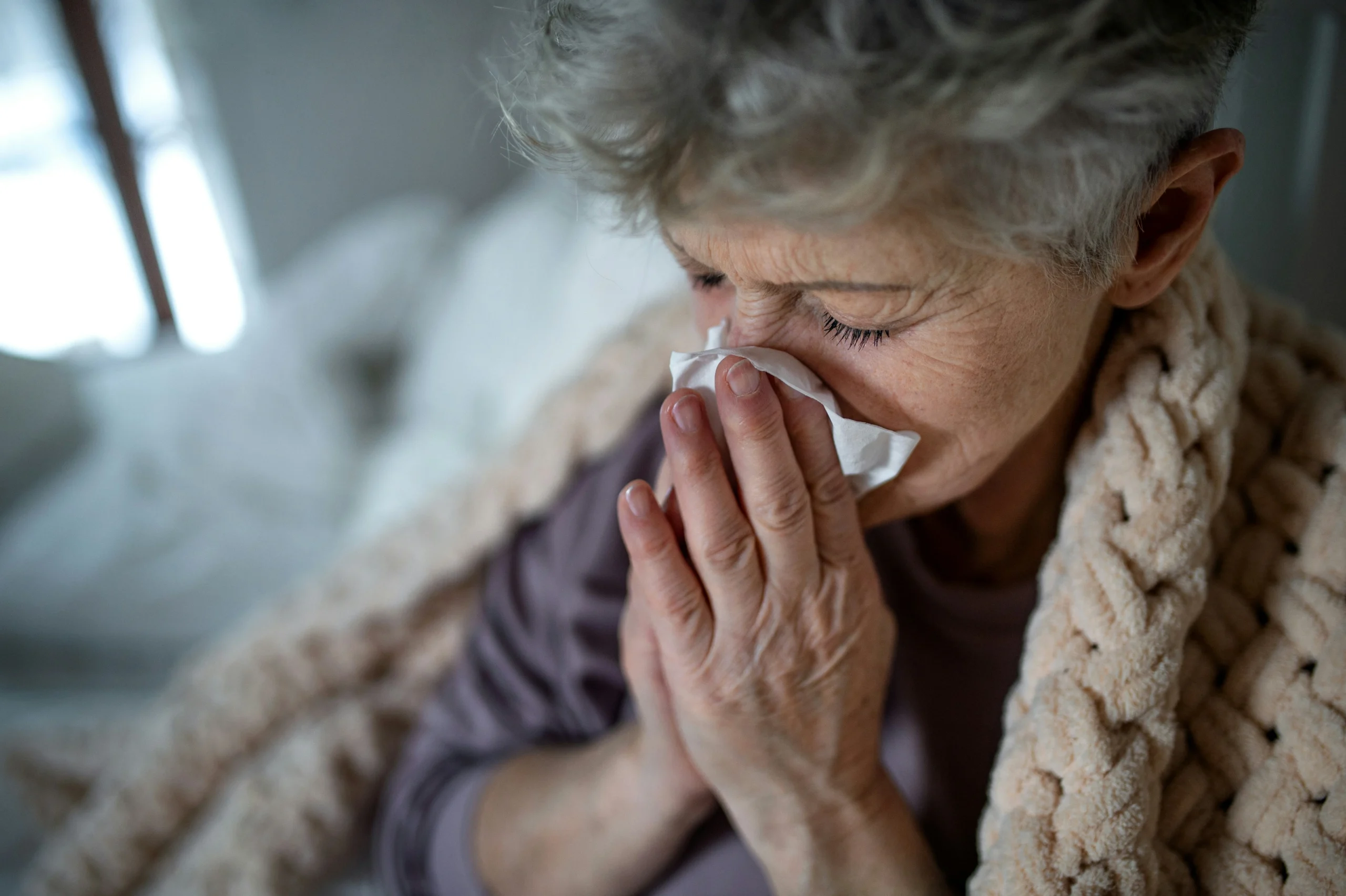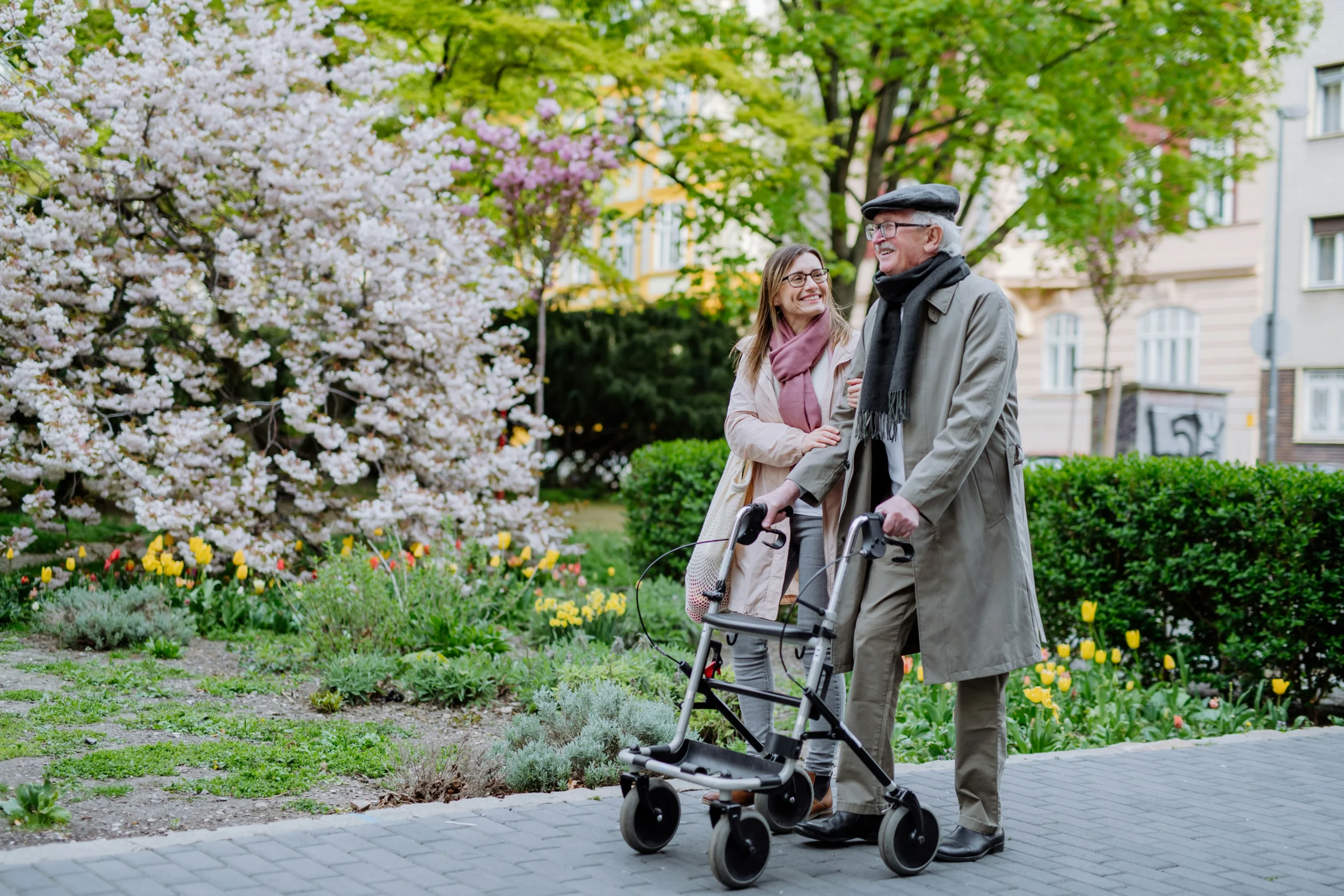
You check the weather before you visit your parent. Most people do. But if your parent is managing COPD, a hot, humid, or hazy day means more than deciding whether to bring a jacket. Humidity and COPD can be a genuinely hard combination, and it’s easy for a difficult day to pass without anyone noticing until symptoms show up.
If you’re not there every day, it helps to know what to watch for yourself, and what’s worth raising with your parent’s home care team. Here’s what’s actually happening in the body, why COPD makes it harder, and when something needs more than watching.
A note before we start: This guide provides general safety information only. It does not replace your loved one’s plan of care or instructions from their physician, pulmonologist, or nurse. COPD management, medication, fluid intake, and when to seek emergency care should always be determined by their healthcare team.
Why Humidity Is Harder on Aging Parents with COPD
Older adults, and especially those managing COPD, are often more sensitive to heat and humidity than most people realize.
The body’s ability to regulate temperature declines with age, so the heart works harder to cool down on hot, humid days. Many people with COPD also have a heart condition or high blood pressure, so heat puts strain on both systems at once.
Humidity adds another layer of difficulty. Humid air can feel heavy and harder to breathe, and hot, muggy conditions can cause airways to narrow, making every breath take more work. Damp indoor air also encourages mold and dust mites, two common COPD triggers. Some people notice their symptoms flare on humid days even without extra activity, which is why humidity is worth tracking as closely as temperature.
Hydration matters too. Someone on blood pressure medication or a diuretic can lose fluid faster on a hot day, and dehydration in older adults often shows up as confusion or dizziness rather than thirst. It can also make mucus thicker and harder to clear.
One important exception: some people with COPD, especially those with heart failure or kidney disease, have been told by their doctor to limit fluids. If that’s true for your parent, follow their doctor’s guidance, and ask their care team what a safe amount looks like on hot days.
When COPD Symptoms Become an Emergency
Most humid-day symptoms are things to watch and mention to the care team. But a few signs mean it’s time to call 911 rather than wait:
- Severe shortness of breath, or breathlessness that doesn’t ease with rest or a rescue inhaler
- Inability to speak in full sentences due to breathlessness
- Bluish or gray lips, fingertips, or face
- Confusion, extreme drowsiness, or trouble staying alert
- Chest pain or a racing heartbeat along with breathing trouble
If you or a home care aide see any of these, don’t wait to see if it passes. Call 911 immediately.
What Family Members Can Notice on Humid Days
A few things are worth keeping an eye on yourself, even if you’re not there daily:
- How they feel after being outside. Extra tiredness, feeling unusually winded, or needing to sit down more than they used to are all worth noting, even after a short time outdoors.
- Patterns they mention on the phone. Comments about feeling worse on hot or humid days, more coughing, or a harder time catching their breath are worth noting, even if they come up in passing.
- Whether the AC is actually being used. Some older adults avoid running the air conditioning because of the cost, even on days when they clearly need it, so it’s worth asking directly.
- Their drinking habits through the day. Notice whether they drink steadily or mostly just at meals, keeping in mind any fluid limits their doctor has set.
Simple Ways to Manage Humidity at Home for Someone with COPD
Once you know what to watch for, a few small adjustments at home can make those hot, humid days easier to manage in the first place:
- Keep indoor humidity in a healthy range. The EPA recommends keeping indoor humidity below 60 percent, and ideally around 30 to 50 percent. An inexpensive hygrometer makes it easy to check, and a dehumidifier can help if the home stays damp. Just empty and clean it regularly so it doesn’t grow mold itself.
- Check that the AC is set to a comfortable temperature, not just running. Some older adults keep it higher than they should to save money. Air conditioning also pulls moisture out of the air, so for someone with COPD, a cooler, drier home can make breathing noticeably easier. On very hot days, a fan alone isn’t enough.
- If cost is the reason the AC stays off, help may be available. New York’s HEAP Cooling Assistance benefit can help eligible households get an air conditioner or fan, including households where someone has a medical condition made worse by heat. Applications open each spring and go fast, so it’s worth applying early. NYC residents can apply through ACCESS NYC.
- Keep water within reach, not just in the kitchen, unless their doctor has limited fluids. A glass by the favorite chair or bedside makes it more likely they’ll actually drink through the day.
- Time outings with the weather and air quality in mind. Plan errands for the cooler morning hours, and check the air quality index on hot or hazy days, especially if wildfire smoke or high ozone is in the forecast.
- If your parent uses oxygen, give the equipment a little extra attention. Keep the concentrator in a well-ventilated spot, away from heat sources, and only change oxygen settings on the prescriber’s instructions.
- Know where to go if the home can’t stay cool. NYC opens cooling centers during heat emergencies. Find one using the NYC Cooling Center Finder or by calling 311.
What COPD Changes a Home Care Aide Can Help You Notice
There’s only so much you can catch from a phone call or a weekly visit. Some of this is much easier to notice for a home care aide who’s actually there during the day, especially on the hottest or most humid stretches:
- Shortness of breath or unusual fatigue. Feeling winded or worn out after normal daily activities can be a sign the heat or humidity is putting extra strain on the body, and it’s worth flagging quickly for anyone with COPD.
- A stuffy, hot home. Avoiding the AC or keeping windows closed can make the indoor air harder to breathe for someone with COPD.
- Dizziness when standing up. Unsteadiness can be an early sign of dehydration or a drop in blood pressure.
- Changes in eating and drinking. How much they eat and drink over a hot day matters more than whether there’s food in the fridge, keeping in mind any fluid limits their doctor has set.
- New or worse swelling. Swelling in the feet or ankles is especially worth flagging for anyone managing heart issues.
- Skin changes. Heat and sweat can make minor skin issues worse and slower to heal, especially for anyone managing diabetes.
Knowing what to watch for is only useful if it actually gets noticed and reported. Before the hottest stretch of summer, talk with your care coordinator or nurse supervisor about which of these changes should be flagged, and how quickly, so it can be built into your loved one’s plan of care. It’s also worth asking who will contact you if something changes, and how.
A home care aide’s role is to observe, note, and report changes promptly, not to interpret or diagnose them. At True Care, our aides report what they notice to our nursing supervisor, who follows up with you and your loved one’s healthcare team as appropriate, with their permission.
How True Care Helps with Humidity and COPD at Home
True Care aides can be there during the hours when heat and humidity are hardest on the body. They’re trained to notice changes and report them promptly to our nursing team, not just to check in and move on. Their observations support the care your parent’s doctor is already providing. They’re an extra set of eyes during the hours no one else is there, not a substitute for medical care.
We support families across all five New York City boroughs, including Manhattan, Brooklyn, Queens, the Bronx, and Staten Island, as well as parts of Westchester County and all of Rockland County. If you’re weighing whether home care could give your family more peace of mind, especially through the hottest and most humid stretches of summer, contact us to talk through what your family actually needs.