
Not sure whether your parent needs a home health aide (HHA) or a personal care aide (PCA)? In New York the distinction matters.
A home health aide has completed a state-approved training program of at least 75 hours and passed a competency evaluation. They are certified and work under the supervision of a nurse.
A personal care aide typically has less formal training and provides a narrower range of services, mainly household support and some personal care, without the clinical observation component a certified home health aide provides.
For Medicaid-covered home care in New York, most authorizations are for home health aide services. If you are setting up care through a Medicaid health plan, you will almost certainly be working with a home health aide. Here’s a closer look at what each role actually covers, and how to tell which one your parent needs.
What Is a Home Health Aide?
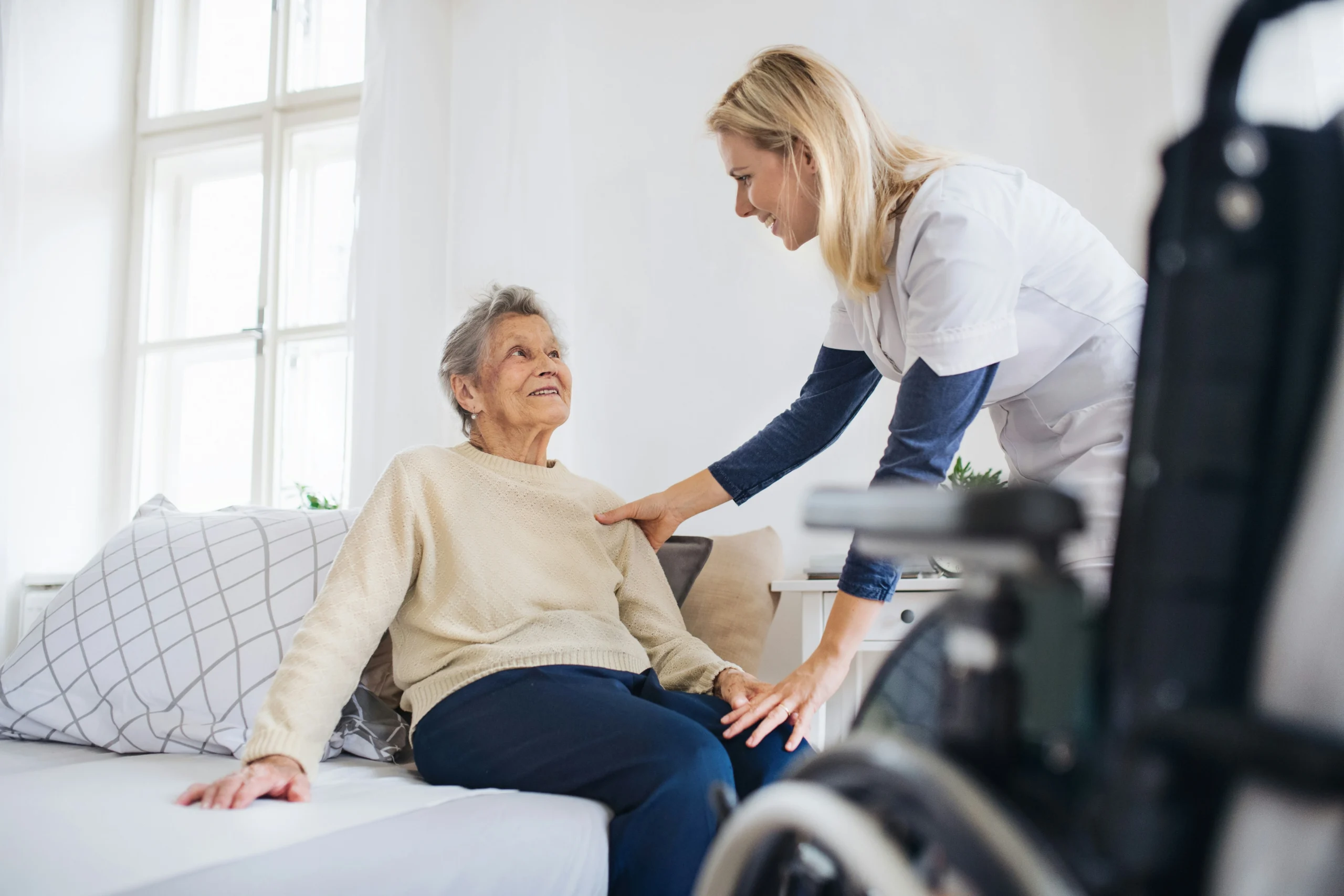
A home health aide, or HHA, is a certified caregiver trained to help with both daily personal care and light health-related support. That includes bathing, dressing, grooming, and mobility assistance, along with medication reminders and tracking and reporting changes in your parent’s condition back to a supervising nurse. Because HHAs complete state-approved training and a competency evaluation, they’re the level of care most Medicaid health plans authorize, and the right fit when your parent’s needs go beyond basic household help.
What Is a Personal Care Aide?
A personal care aide, or PCA, focuses mainly on non-medical support: light housekeeping, meal preparation, laundry, errands, and companionship, with occasional help getting dressed or groomed. PCAs don’t go through the same state-mandated training or competency evaluation as HHAs, and they don’t provide the clinical observation or reporting a nurse relies on. A PCA can be a good fit when your parent is mostly independent and just needs a hand around the house, rather than ongoing health monitoring.
Home Health Aide vs Personal Care Aide in New York: A Side-by-Side Comparison
| Home Health Aide (HHA) | Personal Care Aide (PCA) | |
| Training | State-approved program, 75+ hours, competency evaluation | No state-mandated training |
| Supervision | Works under a nurse | No clinical supervision |
| Scope | Personal care + light health support, tracks and reports changes | Mainly household support, some personal care |
| Medicaid coverage in NY | Typically authorized | Rarely authorized |
The short version: an HHA is certified, supervised by a nurse, and trained to notice and report health changes, while a PCA offers a lighter, mostly household-focused level of support without that clinical layer. That difference is also why Medicaid health plans in New York typically authorize HHA services rather than PCA services. If your parent has any ongoing medical needs, an HHA is usually the right call; if they’re managing well physically and just need help keeping up with the house, a PCA may be enough. When you’re not sure which applies, that’s exactly what True Care’s team can help you sort out.
How to Get a Home Health Aide in New York (Medicaid or Private Pay)
If your parent has Medicaid, the process starts with their Medicaid health plan, not with the agency. The plan authorizes the care, specifies how many hours per week, and sends that authorization to the agency you choose. True Care can receive that authorization and match your parent with an aide from there.
If your parent does not have Medicaid or earns too much to qualify, private pay is the other option. With private pay you arrange care directly with the agency at an hourly rate, without needing insurance authorization. Care can often start faster this way.
In either case, True Care’s team can walk you through what applies to your situation. That conversation is free.
How Does True Care Match Families With the Right Aide?
Once care is authorized (or you’ve chosen to go private pay), the next step is finding the right person. A good match is about more than availability. It is about language, personality, routine, and trust, especially because the aide will be alone with your parent in their home, often for hours at a time.
When True Care takes on a new case, we ask about your parent’s preferred language, daily routine, mobility needs, and any specific preferences your family has. We then match from our network of certified aides with those factors in mind. If the first match is not right, we work with you to find a better one.
True Care’s aides are fluent across more than 13 languages, including English, Spanish, Mandarin, Cantonese, Russian, Bangla, and Creole, which matters in New York, where a patient who is more comfortable in their first language receives meaningfully better care.
Ready to Get Started With a Home Health Aide in New York?
Still not sure whether your parent needs a home health aide or a personal care aide? The fastest way to get clarity is to call us. We’ll help you understand what level of care your parent needs, whether it would be covered by Medicaid, and how to get started. Contact the True Care team today.